
History of the Palace
The first certain news regarding the existence of a real estate complex owned by the lords of Maniago and located outside the Castle’s walls dates back to 1428.
The Castle construction, however, goes back to the 12th century. The complex was enlarged by Pietro di Maniago, through acquisitions and transformations starting from 1536, as consequence of two violent earthquakes (1511 and 1575) which almost completely destroyed the castle and forced the family to move to their houses in town.
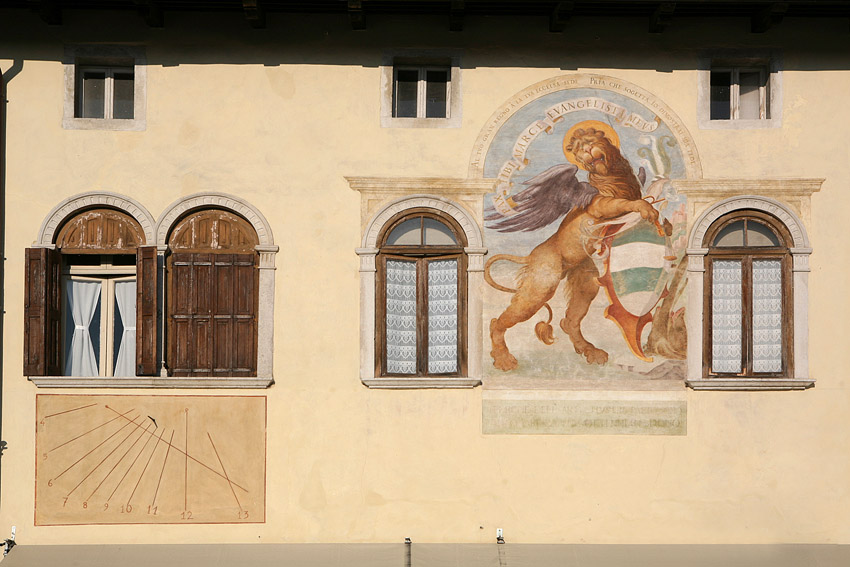
On the north facade (the oldest of the Palazzo) in 1550 Pomponio Amalteo, a well-known painter and pupil of il Pordenone, frescoed Saint Mark’s lion holding, instead of classic Gospel, the coat of arms of the lords of Maniago.
The family commissioned this work in memory of the treaty between Bartolomeo di Maniago and Venice signed in 1420
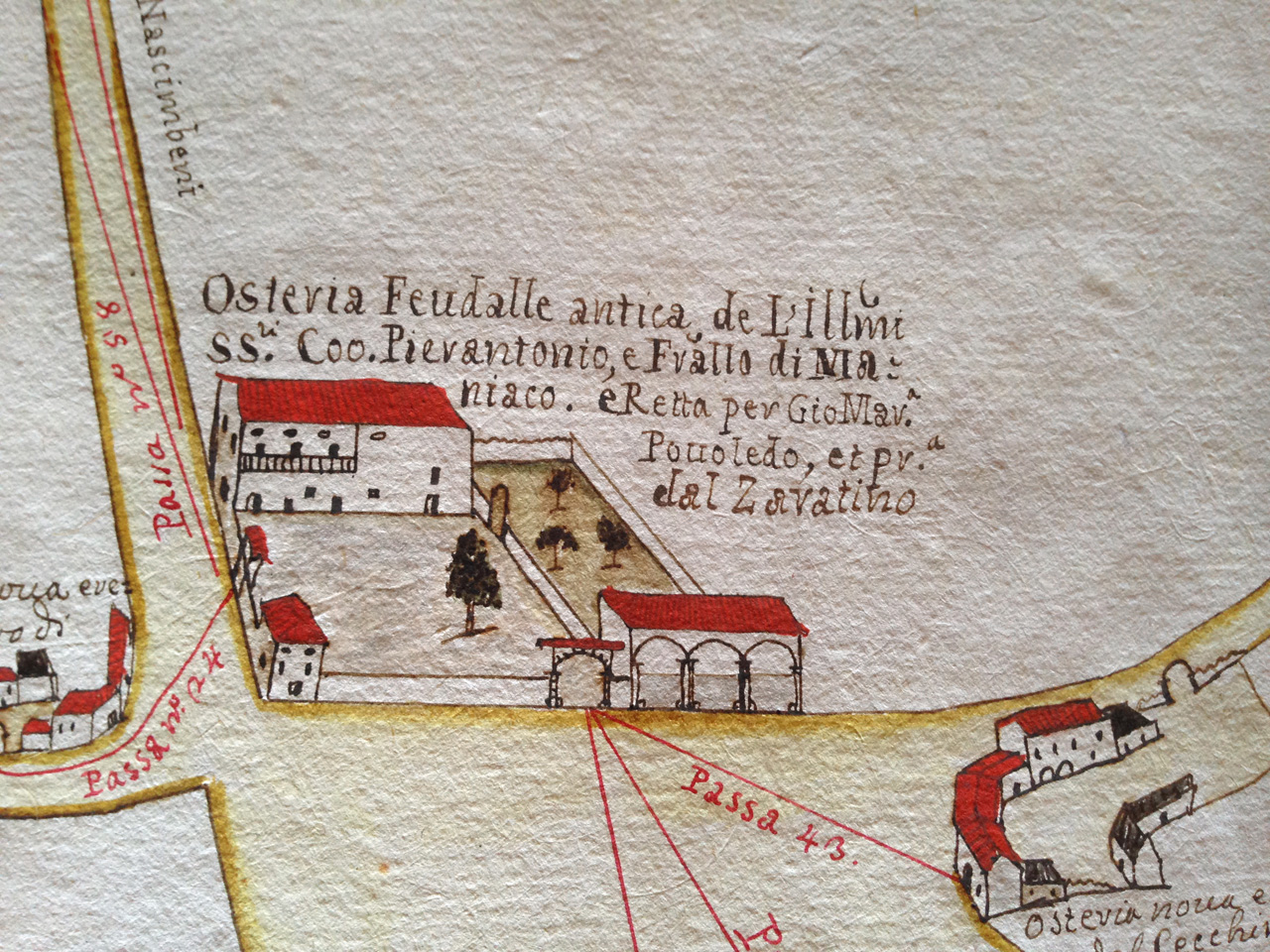
The definitive arrangement of the complex took pale on the occasion of Fabio I sumptuous wedding with Caterina di Spilimbergo in 1739. The central body of the Palace was reorganized, making the facade homogeneous and was built the marble staircase, as documented in the family archive: “in this year Ducati 1,000 were spent in the factory here in Maniago, having raised the staircase from the foundation and renovated the Sala”.
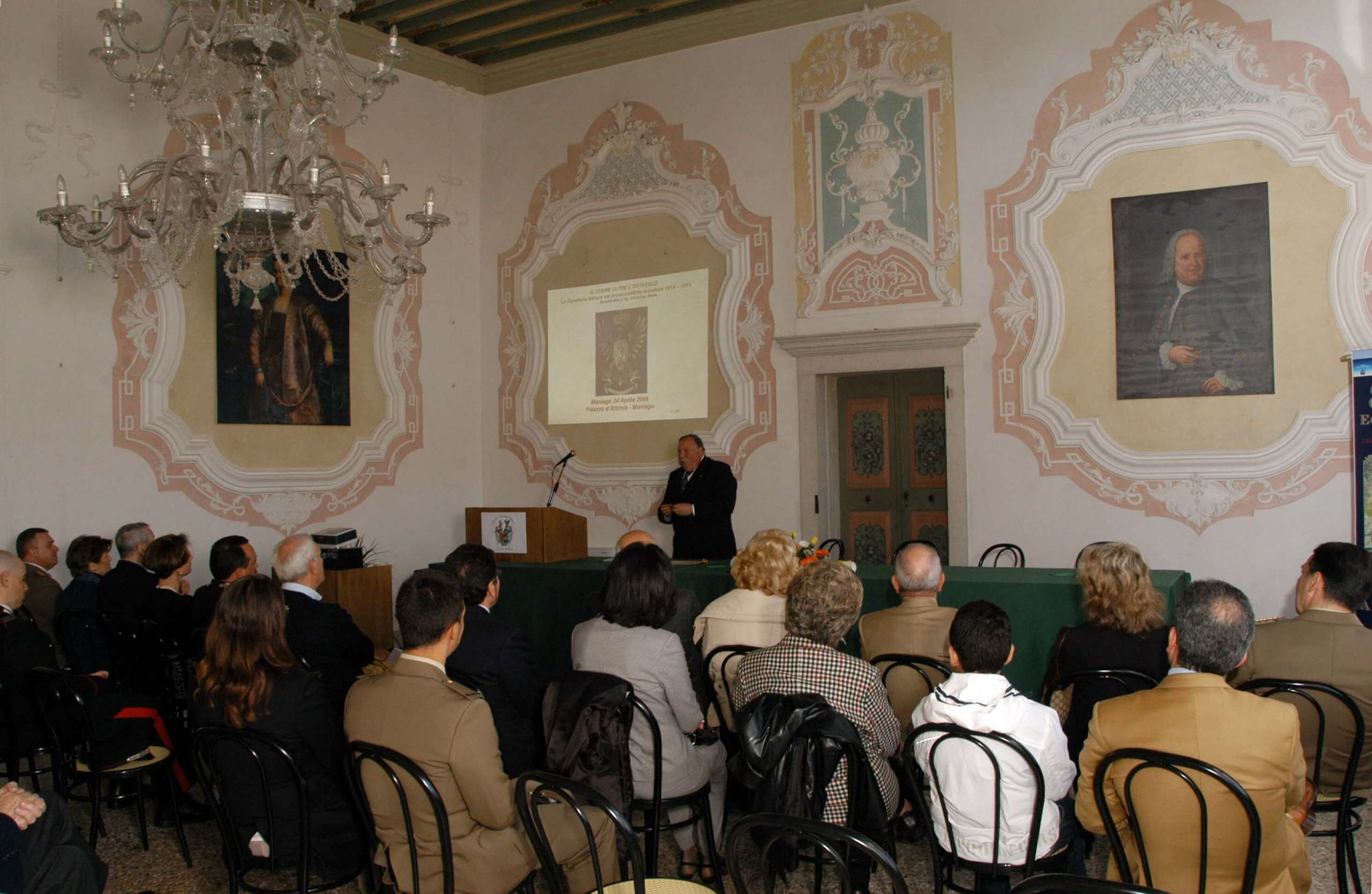
In 1740 the halls on the noble floor were decorated with stuccos: “in this year the stuccos of the Sala here in Maniago were made and they cost 200 Ducati”.
We don’t know who was the architect who designed and carved out the works, but probably was Fabio I himself, a man of remarkable culture and talent.
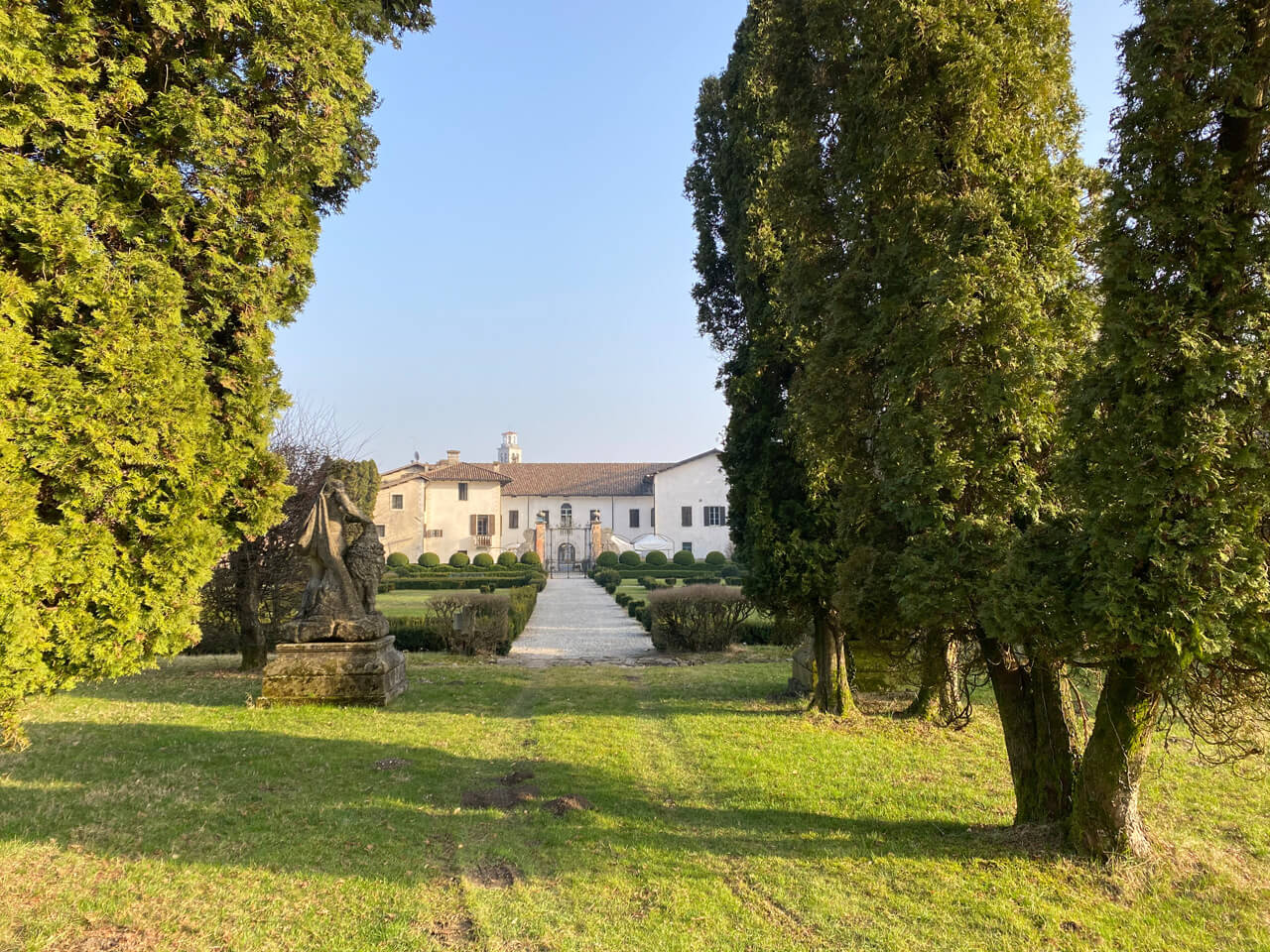
In the following years the renovation works continued: a church adjacent to the palace was built, with stairs to connect it with house’s various areas (the family attended mass daily, but they did it directly from the palace), the stables and Francesco Bertoldi, gardener of Villa Manin, was commissioned to create the Italian garden.
In the first decades of nineteenth century, Fabio II di Maniago, returning from his stays abroad, began to collect and plant the rare essences that make up the 6-hectares English park.
Residence of the family until the second half of XXth century, in the first years after World War II the building housed the civil hospital of Maniago.
Seriously damaged by 1976 earthquake, it was restored with long and important works over the following decades. Today Palazzo d’Attimis-Maniago has become a location for wedding, events, conventions, concerts and sports events.